
Brendel: A Pianist's Guide to Artistry and Technique
Alfred Brendel once said that a pianist's job is to make the music speak. Not to decorate it, not to show off, but to find the composer's voice and let it breathe. I've been listening to his Schubert sonatas for two decades。and that principle shows up in every phrase. His touch is never flashy—it's inquisitive, almost conversational. You hear the structure, not just the notes.Start with his early recordings of Beethoven's Bagatelles. Brendel doesn't treat them as trifles. He shapes each one like a miniature essay, with clear beginnings and endings. Notice how he varies the attack: some chords are pressed, others are tapped, and occasional notes are almost spoken. That variety isn't random. Brendel believed that every dynamic change should serve the harmony. Try imitating that by playing a short piece and marking every spot where the melody changes direction. Then ask yourself: does my touch reflect that shift?If not。
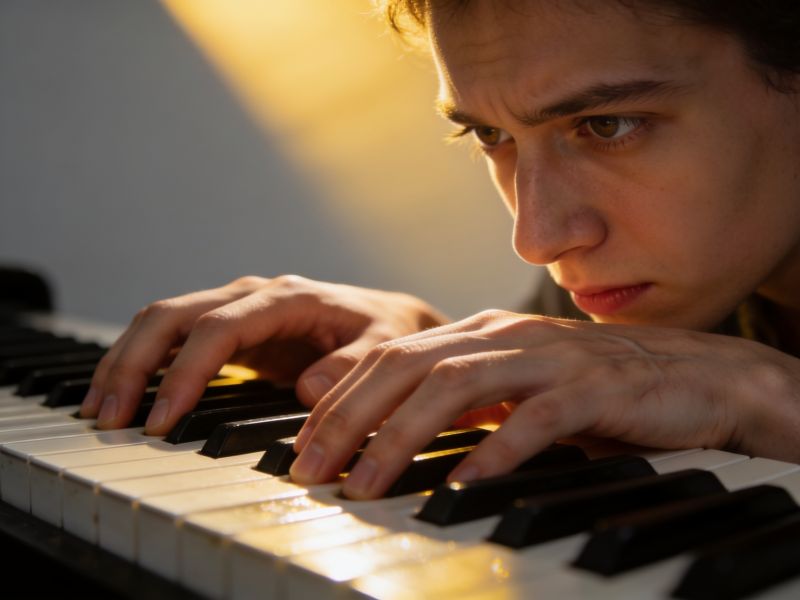
adjust your finger weight.One of Brendel's most practical habits was his practice log. He wrote down what he heard in his own playing—not just wrong notes。but wrong intentions. I adopted this after a masterclass in London where a student played Mozart's Rondo in A minor and Brendel asked, "What did you want the listener to feel at the return of the theme?" The student hesitated. Brendel nodded. "Exactly. If you don't know, neither does the audience." So keep a notebook. After each session, write one sentence about a moment that felt false and one that felt true. Then design a five-minute exercise to fix the false one. This is how Brendel worked—diagnose, isolate, repeat.Phrasing is where Brendel's influence is easiest to miss. He rarely played a phrase the same way twice. On his 1970s recording of Schubert's Impromptu Op. 90 No. 3, the opening melody floats without a metronome pulse, yet the left hand stays steady. That tension between freedom and control is the goal. A practical exercise: set the metronome to a slow tempo and play a melody strictly on the beat. Then turn off the metronome and play it as if you're telling a story. Record both versions. Listen for where your timing changes—and ask whether each change makes musical sense or is just habit. Brendel called this "conscious rubato."
His later years brought a shift toward economy of motion. Watch footage of Brendel playing Beethoven's Diabelli Variations in his sixties: his hands stay close to the keys, and his shoulders rarely move. That restraint allows for finer control of tone. A simple drill: play a five-finger scale with a coin on the back of your hand. If it falls, you're using too much arm weight. Brendel used a similar trick with a matchbox. The point isn't to play like him—it's to borrow his curiosity. He once said that a good performance leaves the audience with questions, not answers. That's the most useful thing I've taken from Brendel: play so that the music remains alive after the last note.
Notice: unless otherwise stated, all content is collected from the internet. If it infringes your rights, please contact us for removal.